
New on InkLora: Deck Check teaches you from 18 meta decks while keeping your own theme
InkLora’s Deck Builder now has Deck Check. Put in the cards you like, and it finds the closest meta deck in the same inks, then shows why that deck is strong, what your deck is missing and which slots your own cards can fill. 18 reference decks to start.
Many players run into the same problem when building a deck: they want to play the characters they love, but don’t know how to make the deck win. Copying a championship list works, but the deck stops being yours.
InkLora’s Deck Builder now has Deck check. Every card you put in stays, and the site finds the meta deck closest to yours in the same inks, then teaches you to borrow its strengths.
Deck check is in beta, so its suggestions may not always be right. Tell us what you think on our Facebook page.
How to use it
- Open the Deck Builder, pick two inks and add the cards you like (a few are enough to start).
- “Deck check · learn from the meta” appears below your deck, with the meta deck it compares you to and why, for example “both decks focus on card draw”.
- Work through the five tabs. If you’d rather learn from another deck, pick one under “Other meta decks”.
The five tabs
Your cards: card by card
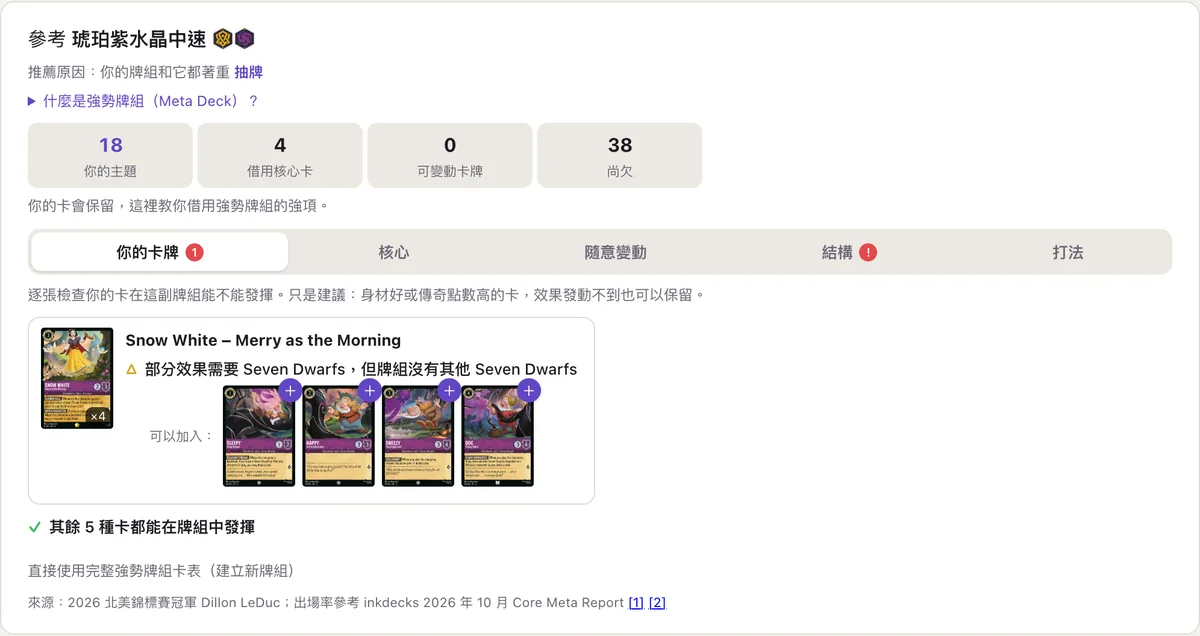
Checks whether each of your cards can work in this deck. For example, part of Snow White – Merry as the Morning needs other Seven Dwarfs; if the deck has none, the site says so and lists cards you can add with one tap.
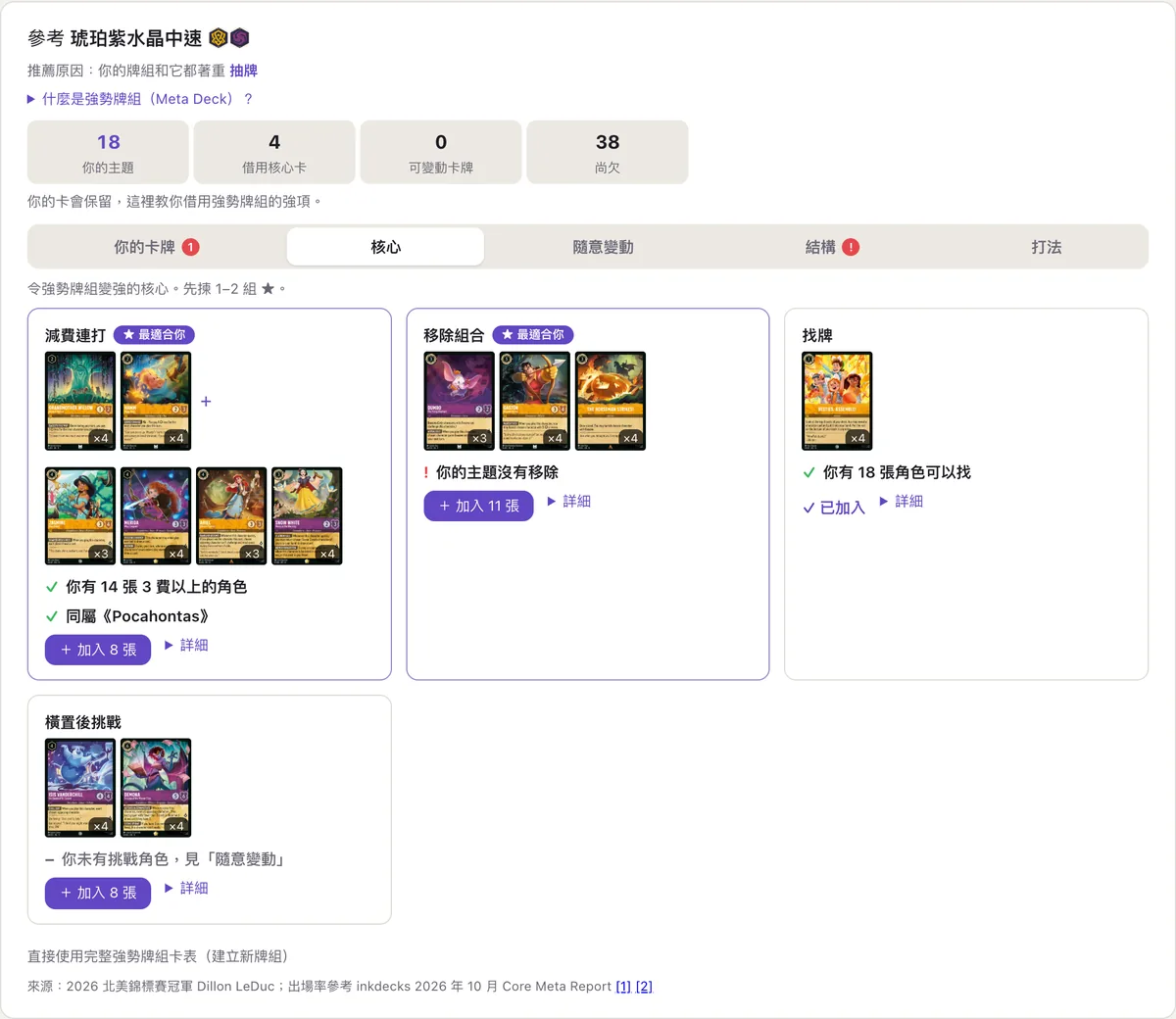
Engines: what makes the meta deck strong
Lists the meta deck’s engines, such as cost reduction, removal or exert-then-challenge. They are ranked for your theme, with the best fits marked “★ Best fit” and the reason why. “Add N cards” puts a whole engine in your deck. Start with one or two.
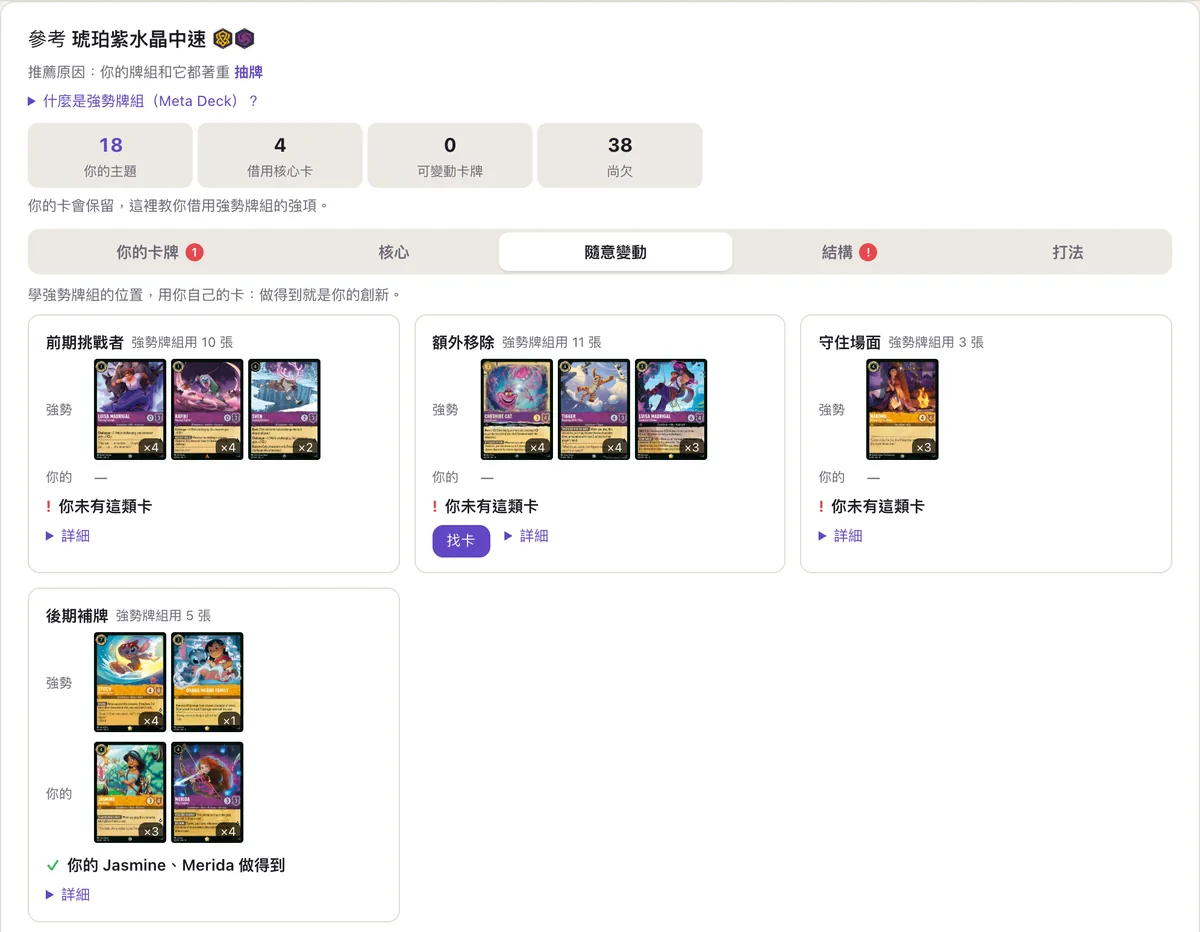
Flex slots: use your own cards
Some slots in a meta deck don’t need specific cards: an early challenger, extra removal, late-game draw. For each slot you see what the meta deck uses and whether your own cards do the same job. If they do, that’s your own innovation.
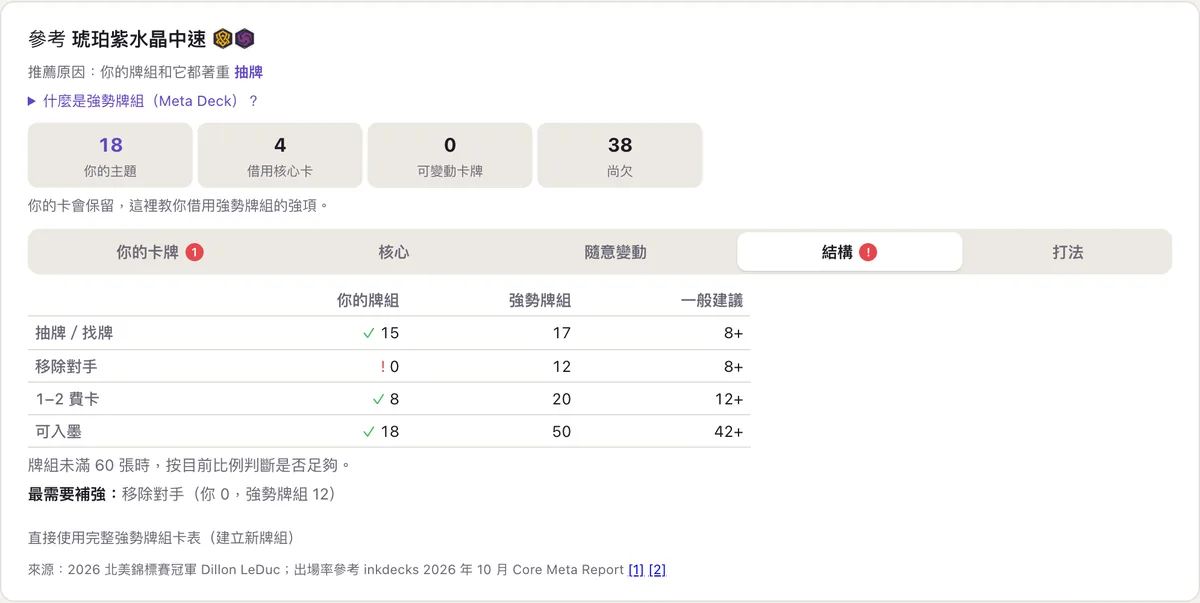
Structure: side by side
Compares your deck with the meta deck: card draw, removal, 1–2 cost cards and inkable cards, next to a general guideline, and points out what you need most. Before your deck reaches 60 cards, it judges by the current proportions.
Game plan: early, mid and late game
How the meta deck plays at each stage, what to keep in your opening hand, how its cards work together and what each card is for.
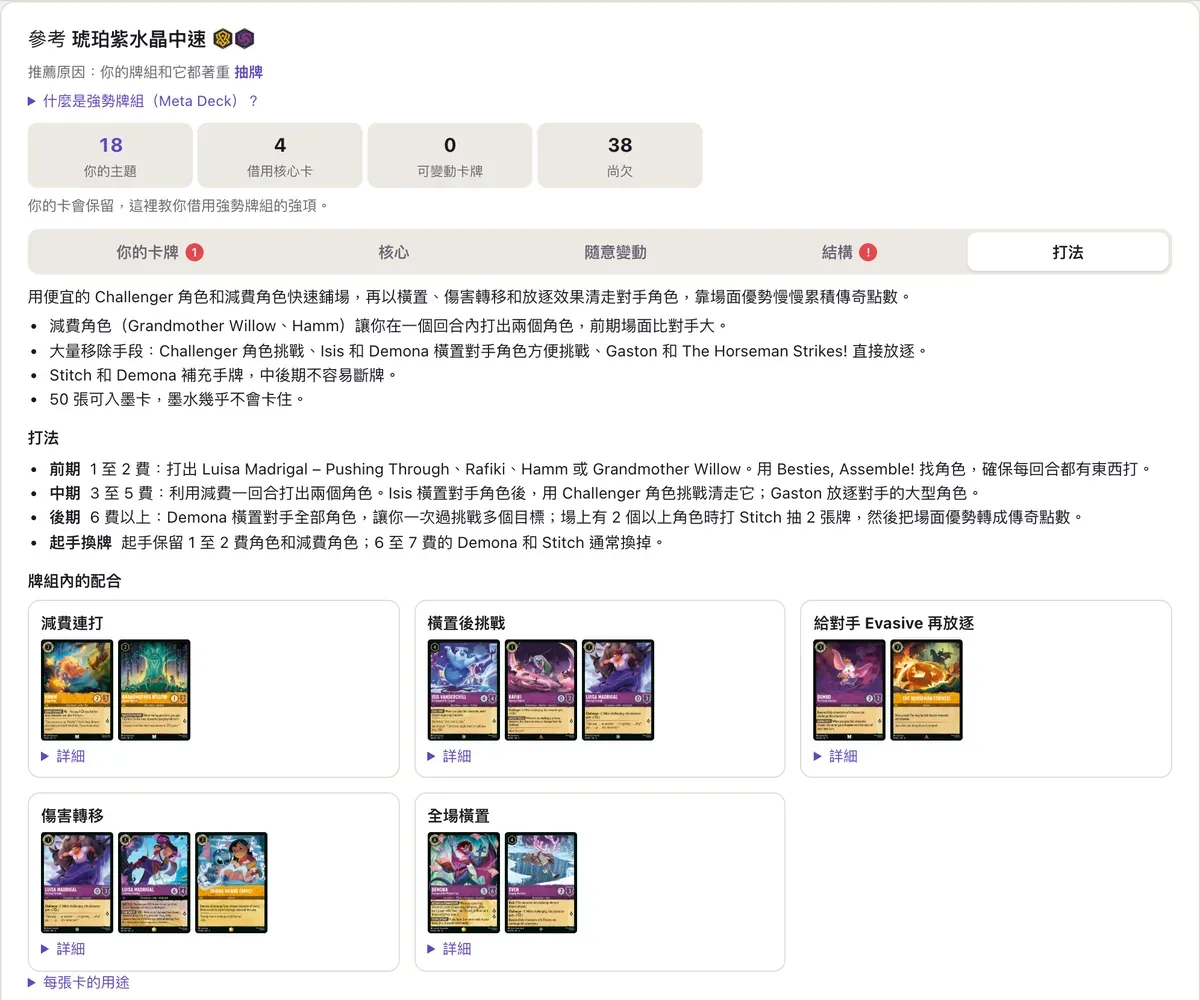
Which decks are included?
18 decks to start, based on lists from tournament winners and top finishers: 16 in Core and 2 in Infinity. They cover Amber/Amethyst Midrange, Emerald/Steel Evasive Control, Amber/Emerald Princess Aggro, Amber/Emerald Songs, Emerald/Sapphire Mouse House, Amethyst/Emerald Retro Device Combo, Amber/Ruby Boost Reckless, Amethyst/Steel Villains, Ruby/Sapphire Ramp, Amber/Steel Lilo & Stitch Songs, Amber/Sapphire Princess Ramp, Sapphire/Steel Detectives, Amethyst/Ruby Evasive, Ruby/Steel Omnidroid Robots, Emerald/Ruby Discard Tempo and Amethyst/Sapphire Ramp Control, plus Amber/Ruby Songs and Amber/Steel Steelsong in Infinity.
To play a meta deck as it is, use “Just use the full meta list (as a new deck)” to create a new deck. Every deck links to its sources.
Set 14, Hyperia City, releases on October 16 and joins Core then; the meta decks will be updated as the new cards show up in tournaments.
Sharing this post is welcome; if you republish it, please credit InkLora and link to this page.